
Learn Arabic Online For Free
Start your journey to fluency with free Arabic lessons from the Nassra Arabic Method, founded by Omar and Khaled Nassra. We provide proven strategies to learn Arabic correctly and efficiently, whether your goal is conversational fluency in Levantine/Gulf dialects or professional Business Arabic.
Arabic Dialects vs. Modern Standard Arabic | Which one is better to Learn First?

Modern Standard Arabic vs. Arabic Dialects: Which is the Better Choice for Achieving Fluency?
The debate over whether it is better to learn Modern Standard Arabic (MSA) or Arabic dialects is ongoing for many language enthusiasts. While MSA does have some advantages, learning the dialect that is spoken in a specific region is the best way to become truly fluent in the language. MSA is primarily used for reading, writing, and formal conversations. It is the wooden, yet official version of the...
Learn the Syrian Arabic dialect (Levantine Arabic) with Nassra Arabic online Method

Learn the Syrian Arabic dialect (Levantine Arabic) with Nassra Arabic online Method
Learning a foreign language can be daunting for many people, but it can be especially intimidating to learn the Syrian Arabic dialect (Levantine Arabic). Fortunately, there is an efficient way to learn this language with Nassra Arabic Online Method. Nassra Arabic is a popular and user-friendly method of learning Syrian Arabic.
This method emphasizes the need to understanding the cultural context along with ...
Why Arabic Storytelling Is So Important When You learn Arabic Online

Arabic, Storytelling, Culture, Education There is no denying that language learning is an art form, and nowhere is this truer than when it comes to learning Arabic.
Native Arabic speakers have a strong connection to the language and its culture, and one of the key elements contributing to this close bond is storytelling in Arabic. Storytelling is more than just a way to entertain; it is an essential tool in the language learning process and can provide learners with a valuable insight into ...
Gulf Arabic Dialect | All You need to Know

Gulf Arabic dialect is a distinct variety of spoken Arabic found in the Persian Gulf region.
This dialect has been in use since the 10th century and is used by millions of people in the area. It is considered to be part of the Eastern Arabic dialects and is known for its intricate grammar and manner of pronunciation. Gulf Arabic dialect began its development in the 10th century when the Islamic conquest brought a new wave of Arabic-speaking people to the region.
The dialects spoken in...
Levantine Arabic dialect | The History Of Levantine Arabic Language

Levantine Arabic dialect is a term that describes the different varieties of Arabic spoken in the Levant region. This region is located in the Middle East and includes countries such as Syria, Lebanon, and Jordan.
The term Levantine Arabic is also used to refer to the variants of Arabic spoken in Palestine to the west of the Jordan River. The history of the Levantine Arabic dialect dates back to the earliest days of the Arabic language itself. The origins of the dialect are not firmly estab...
Learn Arabic Dialects: The Essential Step Before Modern Standard Arabic

Learn Arabic Dialects: The Essential Step Before Modern Standard Arabic
Wondering where to start with Arabic? While Modern Standard Arabic (MSA) might seem like the obvious choice, many learners find that diving into Arabic dialects first is the key to quick, confident communication. This approach helps you speak naturally, build a strong vocabulary, and connect with native speakers—all while laying a solid foundation for mastering MSA later. In this blog, we’ll break down why starting with a
...Learn Arabic Online For Free - Learn more than 100 Arabic Phrases and Vocabulary!

Learn Arabic Online:
Online learning has become the preferred choice of many students and individuals who want to learn a new language. Arabic is one such language that has become popular in recent years due to its interesting grammar structure, beautiful calligraphy and a rich history.
The good news is that anyone can now learn Arabic online for free.
Learning Arabic online for free can be done in several ways. First and foremost, you should invest in a good Arabic language course. There ...
9 Romantic Ways to Say I Love You in Arabic

Have you ever wanted to express your love and affection in Arabic? If the answer is yes, you’re in luck! There are many different romantic ways to say “I love you” in Arabic, with each phrase conveying a different emotion. Here are 9 romantic ways to say “I love you” in Arabic that will leave a lasting impression.
1. Ana Behebak (أنا بحبك): This is the classic way to tell someone you love them in Arabic. It directly translates to “I love you” and is the all-encompassing phrase for expressi...
Learn Arabic Online For Free | How to Say I like Or I love in Arabic
Learn Arabic Online For Free
Watch the Arabic online lesson then read the article bellow
In Levantine Arabic, there are many ways to say "I like" depending on the context. The most common terms used to express liking something or someone are:
ahebbak or ahebbik (for male and female speakers, respectively), shoghelk, and bishtarak.
To say "I like" in reference to a person, use the phrase ahebbak or ahebbik. This expresses a genuine fondness for someone and is used to show appreciation o...
Learn Arabic Online Free | How To Say Good Morning In The Arabic Language
Learn Arabic Online Free | How To Say Good Morning In The Arabic Language
Good morning is an important phrase to know when traveling to Levantine Arabic speaking parts of the world.
Here, we’ll discuss how to say good morning in Levantine Arabic and provide some cultural insight into the phrase's usage. In most parts of the Levant, the preferred way to say “good morning” is “Sabah el kheer”.
This phrase is used to wish someone good morning in a friendly and respectful manner...
Learn Arabic Online With Nassra Arabic Method
6-Month Online Membership.
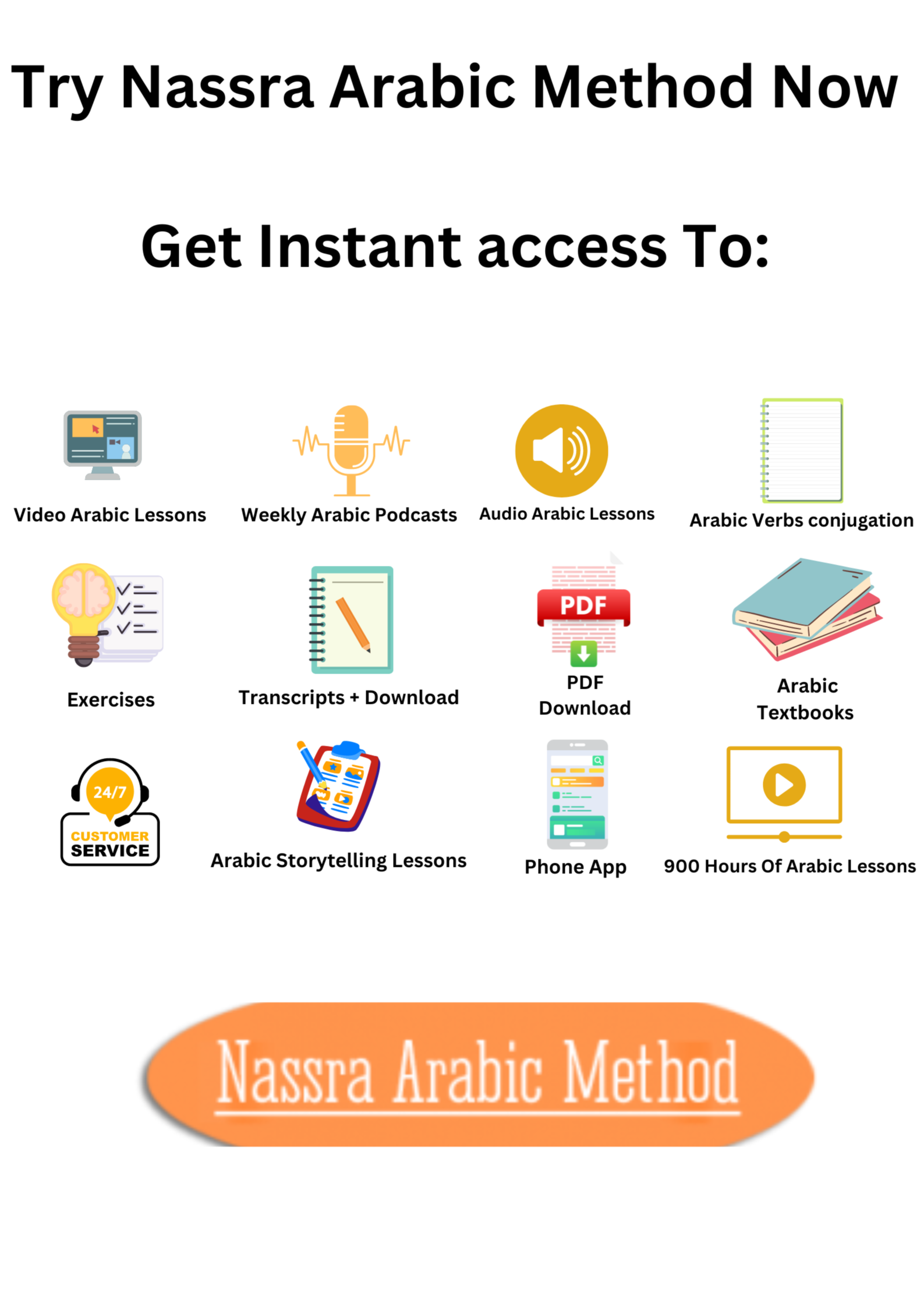
Gain access to over 900 hours of content, including a 4K video library, audio Arabic lessons, and podcasts. Our carefully curated lessons cover a wide range of topics, allowing you to master the intricacies of Levantine and Gulf Arabic dialects. With downloadable transcripts, you can study at your own pace, anytime, anywhere.
Recent Posts
