
Learn Arabic Online For Free
Start your journey to fluency with free Arabic lessons from the Nassra Arabic Method, founded by Omar and Khaled Nassra. We provide proven strategies to learn Arabic correctly and efficiently, whether your goal is conversational fluency in Levantine/Gulf dialects or professional Business Arabic.
Learn Arabic Online | How To Say Good Morning

Go Learn Arabic Online With Nassra Arabic Method
Welcome to this Arabic lesson, where you will learn how to effectively use the phrase "good morning" in real conversations, along with many other useful phrases in Levantine Arabic. Our online Arabic courses at Nassra Arabic Method offer much more than just a sample; you will have access to over 900 hours of video and audio lessons, complete with transcriptions for easy learning. But for now, let us focus on mastering the simple yet powerful phra...
Learn Arabic Phrases With Nassra Arabic Online Method

Dive into the Beauty of Arabic with Nassra Arabic Method: Unlocking 900 Hours of Language Learning Joy!
Are you ready to embark on a linguistic journey that not only teaches you the essence of Arabic but also immerses you in its rich culture? Look no further than the Nassra Arabic Method, where learning Arabic is not just an educational experience but a captivating adventure!
Unlock a World of Knowledge with Over 100 Essential Phrases
In a teaser video, Nassra Arabic Method introd...
Learn Arabic Online With Omar and Khaled Nassra

Would you like to effortlessly converse in Arabic?
Meet Omar and Khaled Nassra, siblings with a combined experience of teaching spoken Arabic spanning more than 20 years.
Drawing from their expertise, they meticulously crafted the Nassra Arabic Method online course. This innovative program offers personalized on-demand lessons, ensuring a tailored learning journey for each student. Boasting a supportive environment and expert guidance, the course equips you with the skills to master this...
Why Learning Arabic Dialect is The Best Way To Master Arabic
The Benefits of Starting with a Dialect First
Learning a new language is an exciting journey, and for those diving into the rich tapestry of Arabic, the path to proficiency may begin with a local dialect rather than the more formal Modern Standard Arabic (MSA). This approach, while unconventional to some, presents a myriad of advantages, especially for beginners, children, and those seeking a more engaging language-learning experience.
1. Simplified Arabic Grammar for Seamless Start:
For ...
Is Arabic easy to learn?
Mastering Arabic: A Strategic Approach to Learning
Arabic, with its rich history and diverse cultural roots, is often perceived as a challenging language to learn. However, adopting a strategic approach can make the process more accessible, particularly by first mastering one of the primary Arabic dialects – Levantine, Gulf, or Egyptian.
Choosing Arabic Dialect:
Arabic encompasses a variety of dialects, each with its unique nuances and characteristics. To facilitate the learning proc...
Arabic Verb Conjugation with Examples

Today, let's explore the key verb 'to read.' While it may seem a bit tricky, it's essential. This verb, derived from قَرَأَ (qara'a), consists of three crucial letters. In spoken Arabic, we often skip the 'qaaf' and disregard the final 'hamza,' pronouncing it as 'araa.' On the other hand, in Classical Arabic (Fus7a), we emphasize the 'qaaaf' and pronounce the final 'hamza' (ء), making it 'Qara'.
Arabic Verb Conjugation Table: Past, Present, Participle
Now, I'll guide you through past, prese...
Duolingo Or Nassra Arabic Method Online App

Choosing the Right Path: Modern Standard Arabic vs. Arabic Dialects
Learning Arabic is an exciting journey, but one must navigate the linguistic landscape wisely to achieve their specific goals. Two popular options for online Arabic courses are Duolingo and Nassra Arabic Method, each catering to distinct language objectives and goals. Understanding the difference between Modern Standard Arabic (MSA) and Arabic dialects is crucial in making an the right choice.
Modern Standard Arabic (MSA...
Arabic Verb conjugation Table: Past, Present, Future| Learn Arabic Online

Conjugating verbs in Arabic means changing their form based on different factors like past, present, or future actions, and the person or thing doing the action.
Learn Lebanese Arabic - Your Guide to Mastering the Lebanese Dialect

Lebanese is considered one of the most comprehensible languages among the Arab States*. Over the past fifty years, numerous songs, poems, books, and many plays and screenplays have been crafted in Lebanese.
What is Lebanese Arabic:
Lebanese Arabic, also called Lebanese العامية الُبْنَانِيّة, a type of Levantine Arabic, is the spoken language in Lebanon. It carries the influence of both French and English. Many Lebanese individuals are multilingual, smoothly switching between Lebanese Ar...
What is Levantine Arabic: 8 Key Features of Levantine Arabic

Levantine Arabic is a fascinating and unique branch of the Arabic language that is predominantly spoken in the Levant region, including countries such as Syria, Lebanon, Jordan, and Palestine. It is a colloquial form of Arabic that differs from the formal Modern Standard Arabic (MSA) used in formal contexts across the Arab world. Understanding the distinct features of Levantine Arabic can broaden our understanding of the cultural tapestry and social interactions in the region. Let's take a close...
Learn Arabic Online With Nassra Arabic Method
6-Month Online Membership.
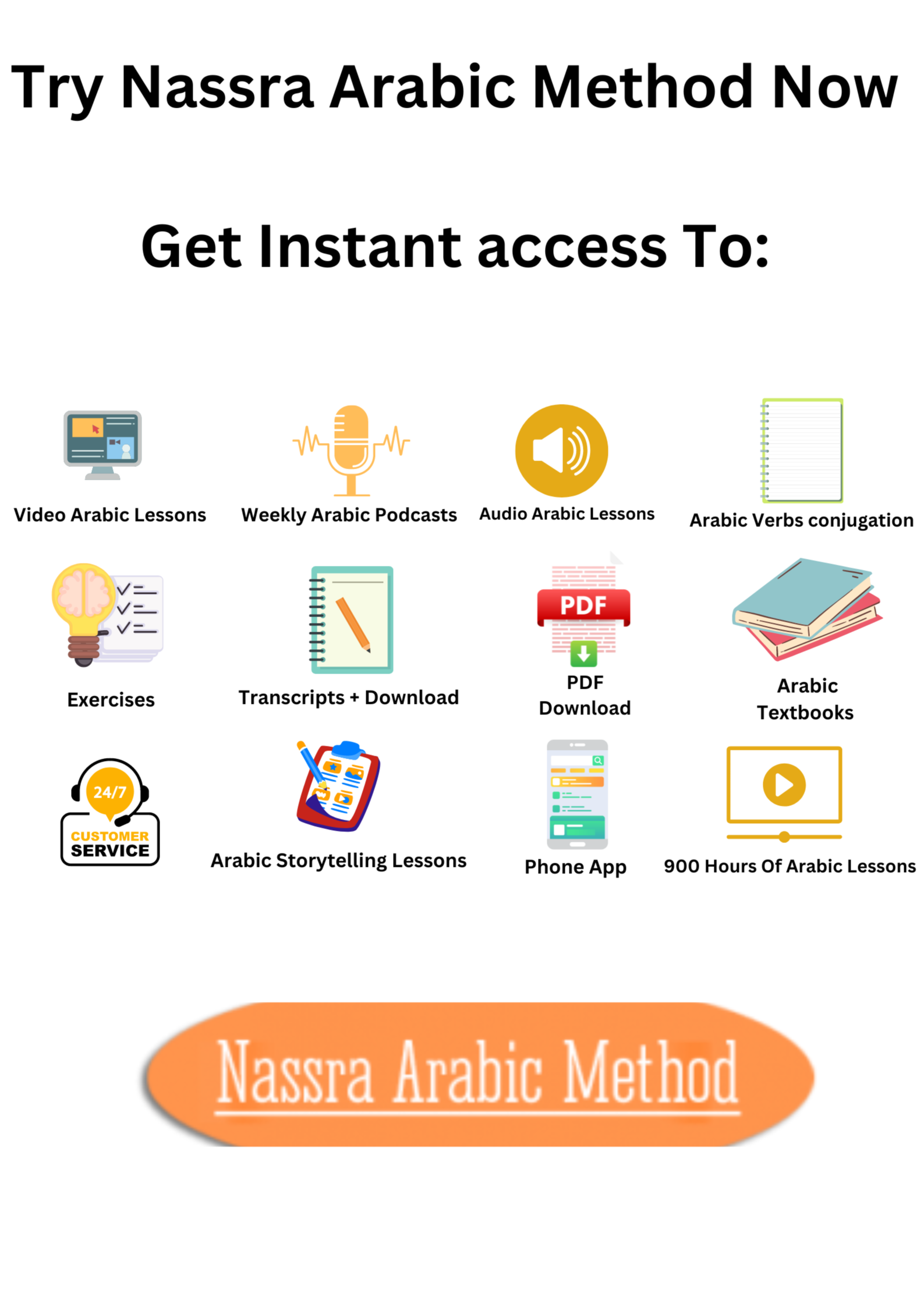
Gain access to over 900 hours of content, including a 4K video library, audio Arabic lessons, and podcasts. Our carefully curated lessons cover a wide range of topics, allowing you to master the intricacies of Levantine and Gulf Arabic dialects. With downloadable transcripts, you can study at your own pace, anytime, anywhere.
Recent Posts
